
The DGW Lens
Reflections on work, life, and the decisions that shape us
Whether I'm writing about divorce coaching, organizational strategy, communication, leadership, or technology, one theme remains constant: clarity matters.
The DGW Lens is where I share practical insights, thoughtful observations, and lessons learned from helping individuals and organizations navigate complex situations with greater confidence and intention.

When Being Right Gets in the Way of Being Effective
Have you ever been in a disagreement where you knew you were right, but the harder you tried to explain yourself, the worse the conversation became?
Perhaps you were correcting something that wasn't true. Defending a decision you believed was reasonable. Or trying to make someone understand why their behavior was hurtful or unfair.
And yet, despite your best efforts, the conversation went nowhere.
This is a familiar pattern in high-conflict relationships, particularly when parents are navigating divorce, custody disputes, or ongoing co-parenting challenges.
But it raises an important question:
Is being right the same thing as being effective?

When Everything Feels Urgent: Making Decisions During Difficult Family Transitions
During a difficult family transition, everything can feel urgent.
The email that just arrived. The text you want to answer. The question your attorney asked. The disagreement about the children. The upcoming mediation or court date. The decision you didn't expect to be making at all.
Whether you're navigating divorce, a custody dispute, co-parenting conflict, or another significant change in your family, it can begin to feel as though everything is important—and everything requires an answer right now.
When that happens, it becomes harder to distinguish between what actually needs your attention and what simply has your attention.
And that's not necessarily the best place from which to make an important decision.

What Does a Divorce Coach Do?
When I tell someone I'm a Certified Divorce Coach®, one of the first questions I often hear is:
“What exactly does a divorce coach do?”
It's a fair question. Most people know when they might need an attorney, therapist, mediator, or financial professional. Divorce coaching is a newer addition to the support team, and its role isn't always as familiar.
The simplest answer is this:
A divorce coach helps you navigate the parts of divorce and difficult family transitions that you have to manage yourself.
That can look very different depending on where you are in the process.

Why I Became a Certified Divorce Coach®
Some of the most important decisions we make come at times when we feel least equipped to make them.
Divorce can be one of those times.
It isn't simply a legal process. It can affect nearly every part of a person's life—family, finances, home, relationships, routines, and plans for the future. And when children, custody concerns, or high conflict are involved, even seemingly small decisions can feel enormously consequential.

What Scalable Companies Do Differently—Before They Scale
Growth is exciting.
It brings new opportunities, new customers, and the possibility of reaching goals that once felt ambitious. But growth also has a way of exposing every weakness an organization has quietly learned to live with.
The businesses that scale successfully aren't necessarily the fastest growing. They're the ones that prepare for growth before growth demands it.
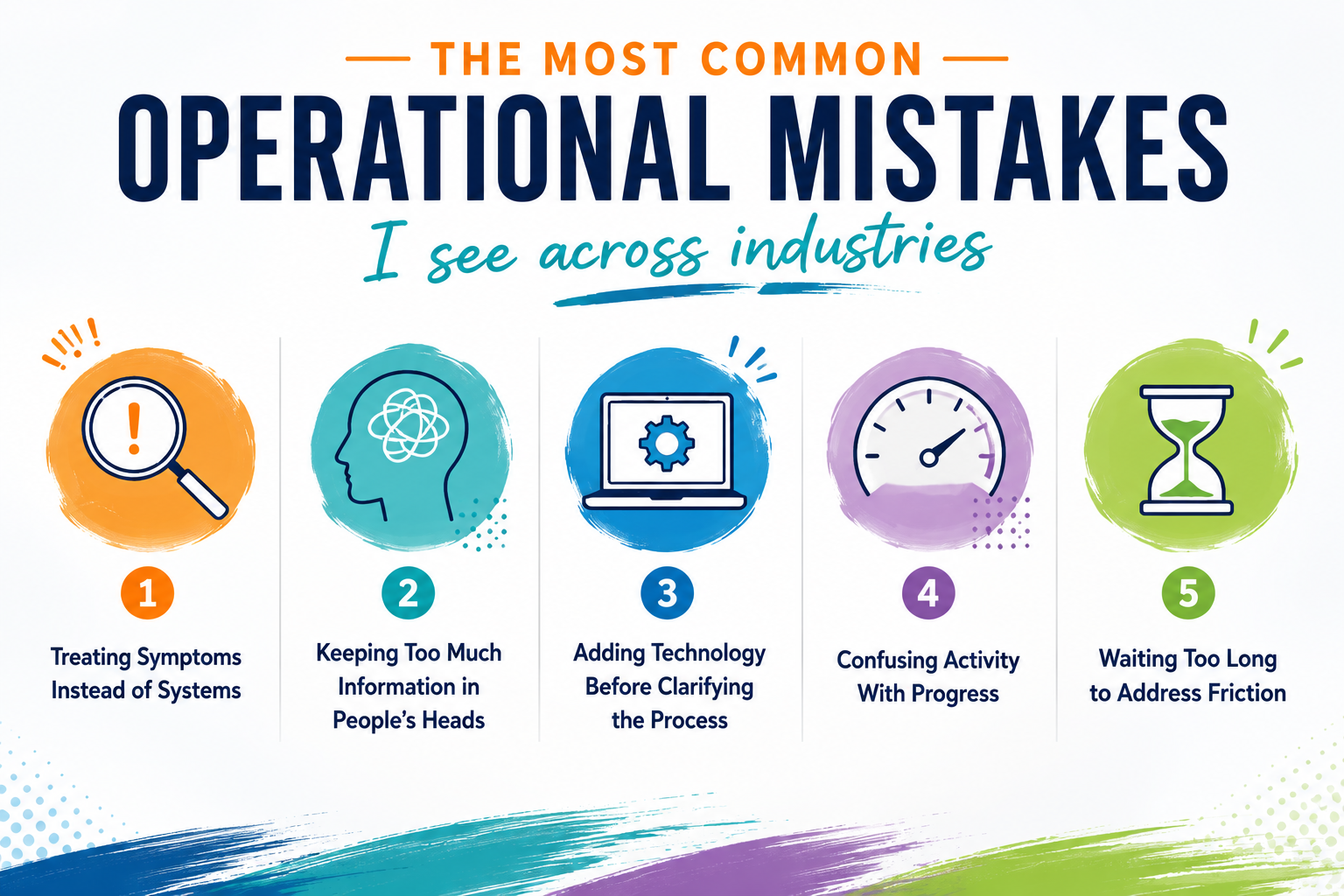
The Most Common Operational Mistakes I See Across Industries
One of the advantages of working across industries is that patterns become easier to recognize.
The specifics may differ—a law firm, a growing service business, a manufacturing company, a client success team—but the underlying operational challenges are often surprisingly similar.
Most organizations are not struggling because people aren’t working hard. In fact, the opposite is usually true. Teams are working incredibly hard inside systems that are creating unnecessary friction.
Over time, I’ve noticed a handful of operational mistakes appear consistently across organizations of different sizes and industries.
Not because leaders are careless.
Because complexity tends to grow quietly.
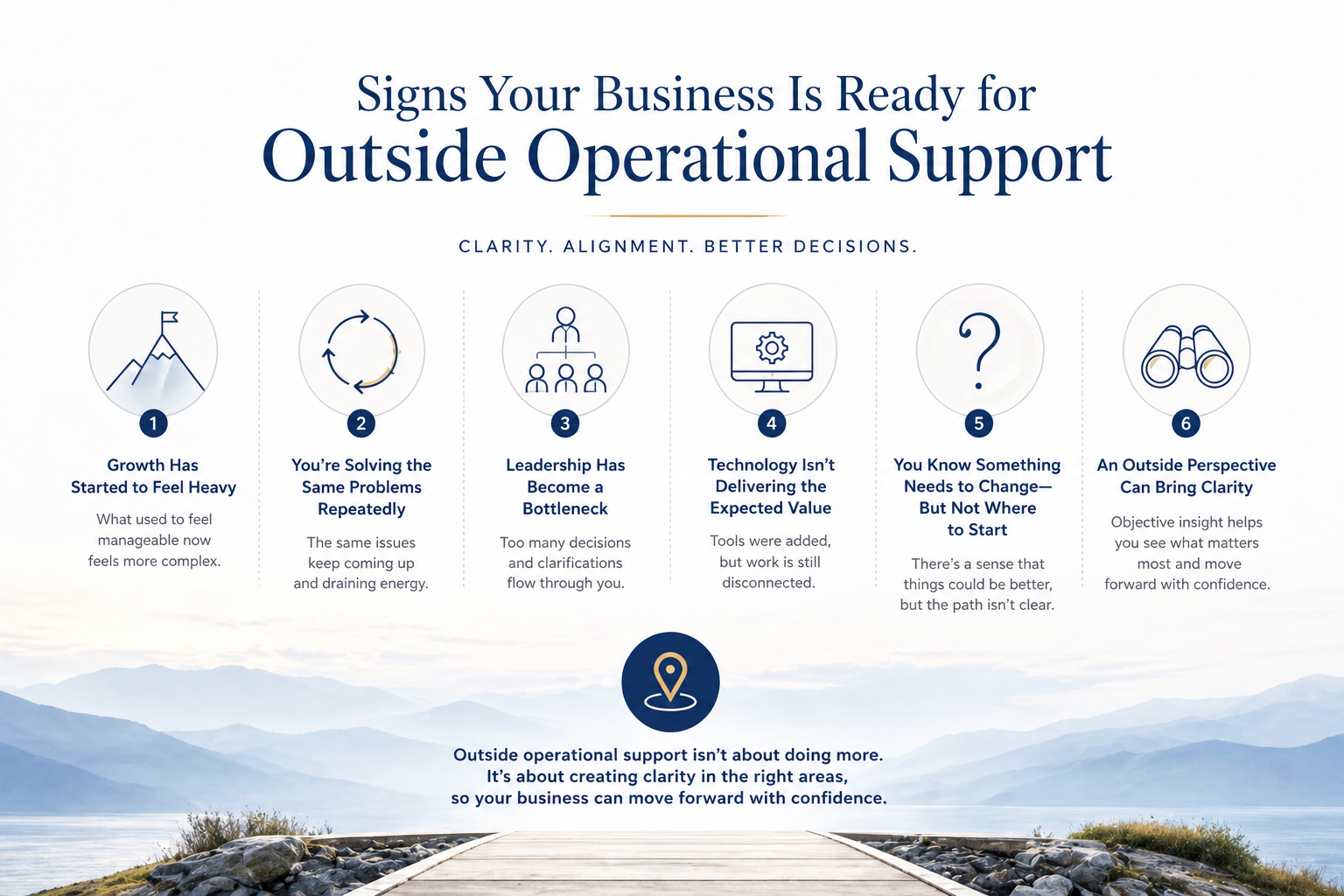
Signs Your Business Is Ready for Outside Operational Support
Most leaders don’t wake up one day and decide they need outside support.
Instead, the need builds gradually—through small inefficiencies, repeated frustrations, and a growing sense that things are harder than they should be.
By the time the question comes up, it’s usually not if support would help, but what kind and when.
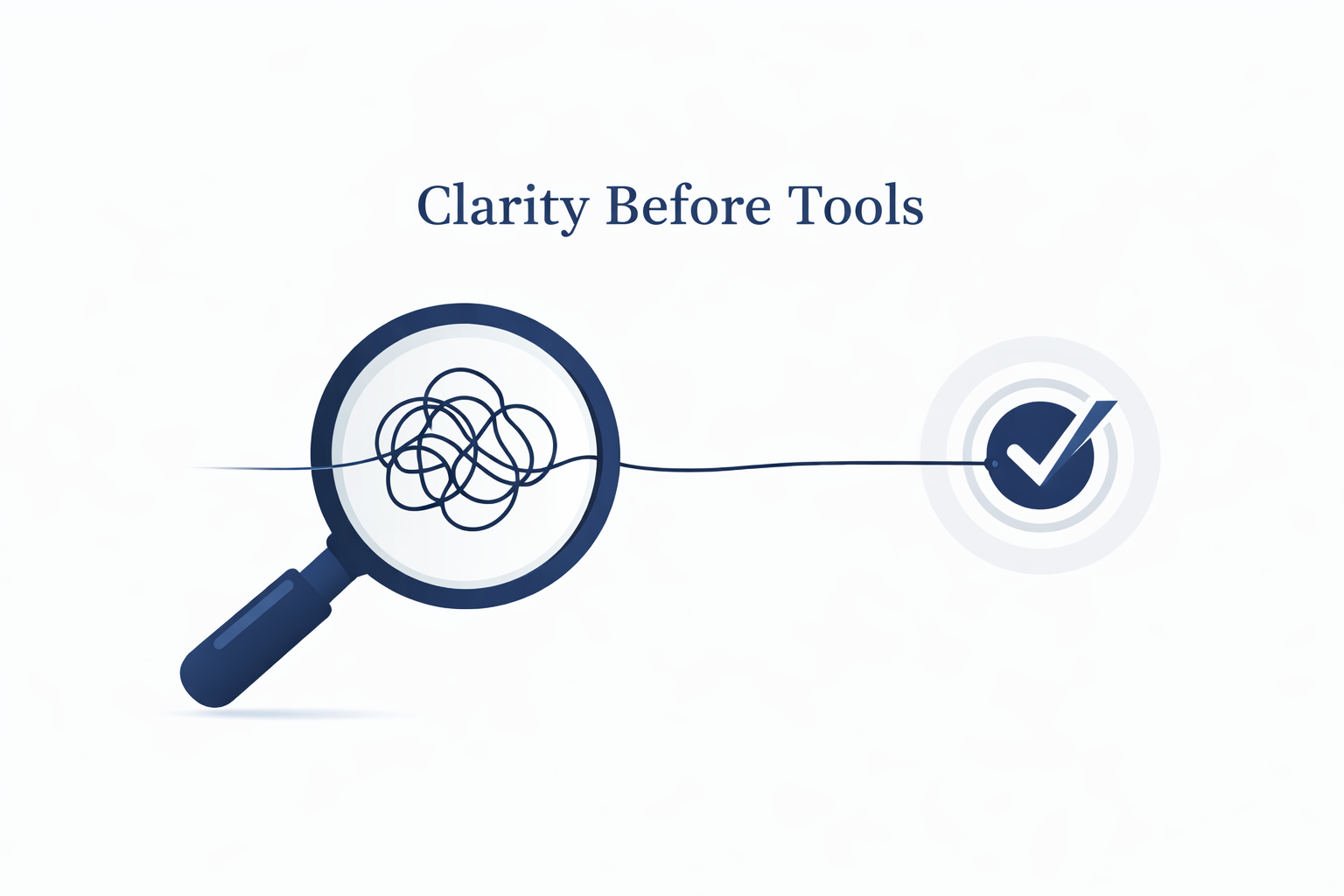
Why Technology Alone Never Fixes Broken Processes
When organizations encounter inefficiency, technology is often the first solution they reach for. New software, automation tools, or platforms promise speed, visibility, and control.
Sometimes they deliver. Often, they don’t.
The difference usually isn’t the technology—it’s the process underneath it.
Technology doesn’t fix confusion. It accelerates it.
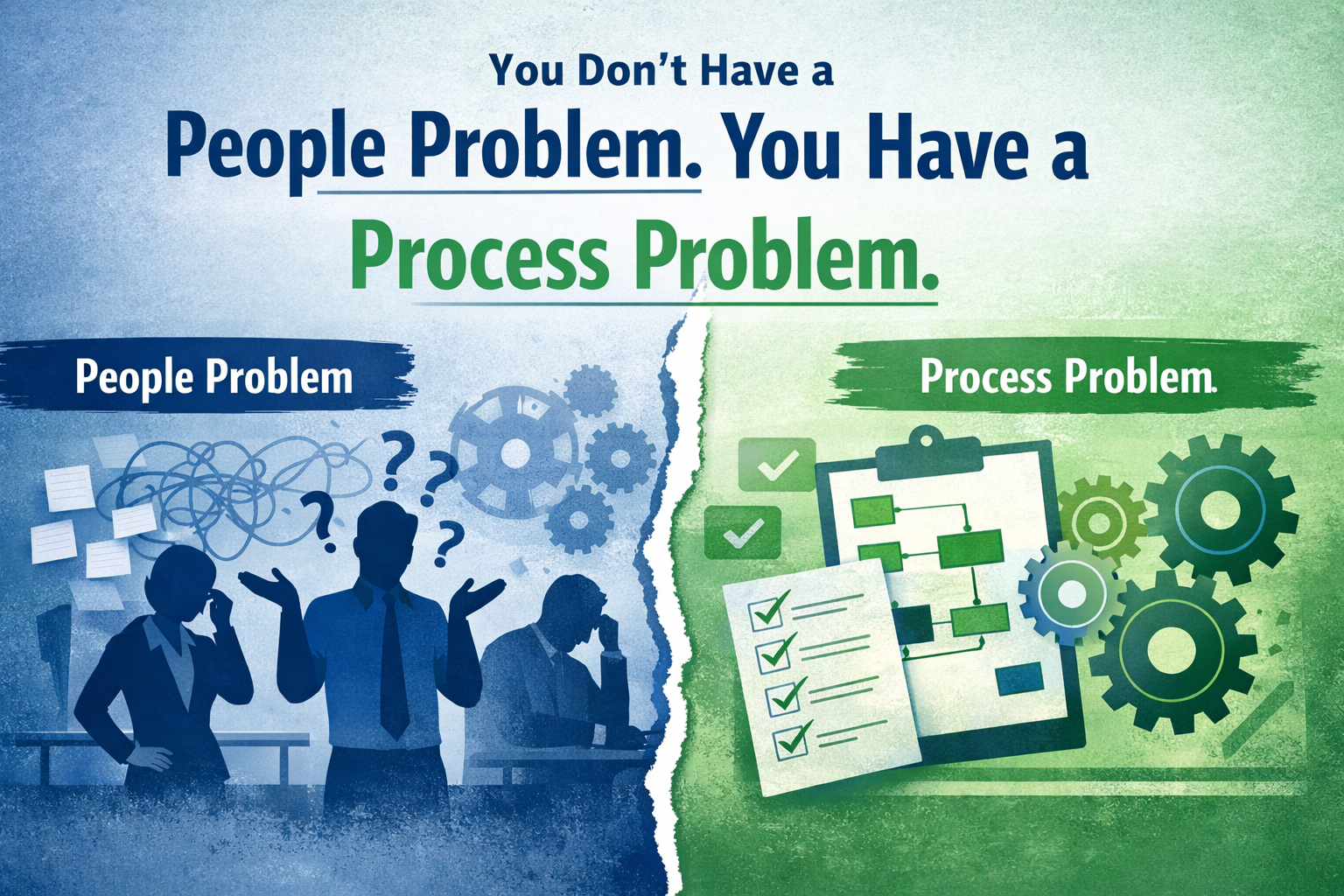
You Don’t Have a People Problem. You Have a Process Problem.
When teams struggle, leaders often assume the issue is performance, motivation, or accountability. But in most organizations I work with, the real challenge isn’t the people—it’s the environment they’re working in.
Talented, capable professionals can only perform as well as the systems that support them.
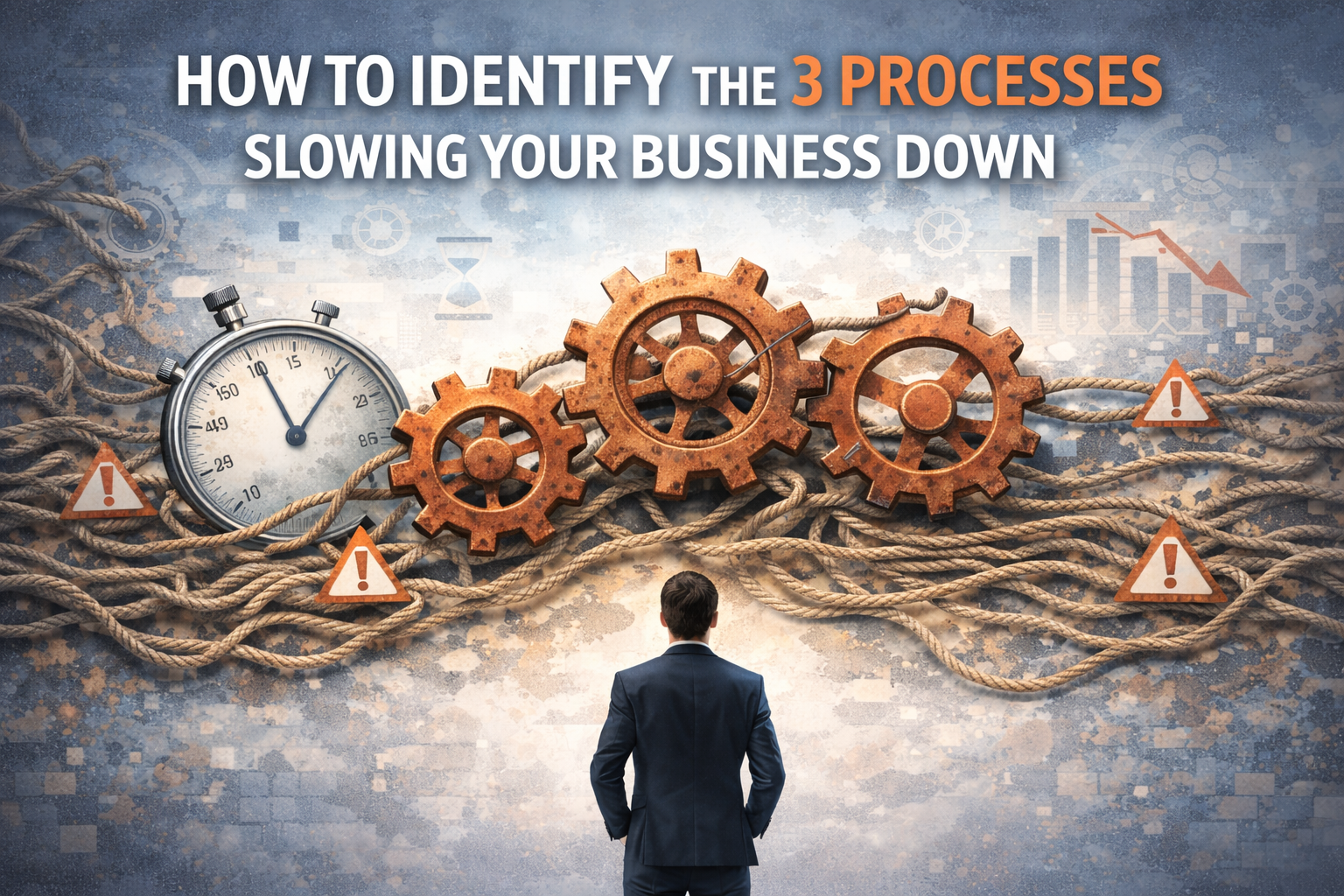
How to Identify the 3 Processes Slowing Your Business Down
When leaders feel overwhelmed, their instinct is often to work harder or push teams to move faster. But speed rarely fixes the real problem. More often, the issue is that a small number of processes are quietly slowing everything else down.
You don’t need to fix everything to make meaningful progress. You need to identify the right things.
Why Operational Clarity Is the Most Underrated Growth Strategy
Growth is often framed as pursuit of more: more customers, more revenue, more tools, more hires. But in my experience, the businesses that grow most sustainably don’t start by adding. They start by clarifying.